


The Dreamcast game prototypes from the NBA 2K series: A victory for Visual Concepts
In 1999, Visual Concepts, then under the umbrella of SEGA, entered the basketball video game market with the NBA 2K franchise, which left its mark on the industry and would go on to establish its dominance over the years. The one and only directive: to deliver the most advanced NBA basketball game of the time and dethrone Electronic Arts’ NBA Live series.
Michael Rhinehart: « VC wanted to beat EA, so I promised him we would. And it finally happened with NBA 2K. »

It makes perfect sense to regard the NBA 2K series today as the ultimate benchmark for basketball simulation. The hype keeps growing with every announcement of a new installment. Fans, waiting impatiently, keep an eye on every small leak that appears on the web. Yet, in the late 1990s, when the first title launched on the Dreamcast, nothing was guaranteed.
Andy Ashcraft: « The thing that impressed me most about them then (and even now, looking back) is how much attention they spent making it look and sound like the sports you'd watch on TV. »
For the release of NBA 2K on the Dreamcast on November 10th, 1999, SEGA pulled out all the stops to break into the basketball game market, which was firmly dominated by EA. On a technical level, NBA 2K on Dreamcast clearly surpassed its rivals with stunning graphics—even rendering players’ tattoos—along with impressive character models animated through Motion Capture and cutting-edge artificial intelligence. VC’s title also introduced signature shoes (virtual representations of real basketball shoes, often created in collaboration with real brands). But it was primarily the design of its cover that won over consumers—an aspect on which the Japanese company made a strong impression. The goal was to captivate the audience and boost sales. To achieve this, SEGA and VC collaborated with Allen Iverson, a rising basketball star known as ‘The Answer’. He would appear on the game’s cover as well as on the next four installments. Working with the Sixers’ superstar perfectly reflected the identity of the franchise: always on trend and perfectly in sync with its era.
The Answer on the game cover

Marc Cellucci: « I did manage the Sega Sports website and content, and I got to go do a motion capture session at VC with (now former) NBA player Brian Grant, which was awesome. »
NBA 2K has always strived to include the iconic figures of basketball history in its rosters and inspirations. Visual Concepts doesn’t stop there and continues to innovate—its flagship series keeps progressing and improving every year by adding new ways to play, increasingly challenging modes, and brand-new features. As proof, on October 31, 2000, SEGA released NBA 2K1 exclusively on the Dreamcast, the long-awaited sequel to the first installment. It marked the introduction of the very first ‘General Manager’ mode (team management) in the history of basketball video games. It also included a Street mode, a variant of the sport played outdoors that became popular in the early 2000s thanks to street culture, hip-hop, and players such as Vince Carter or Jason Williams. Finally, it allowed up to 8 players to compete online thanks to the console’s built-in modem.
Nick Jones: « NBA 2K was programmed by a completely different team than NFL 2K. So even though they probably looked quite similar, all of the code and art, even for the UI, was completely different to NFL 2K. »
NBA 2K1 Dreamcast Prototype Trailer (The Mask Build)
In 2001, SEGA thanked the devoted supporters of the Dreamcast by offering them NBA 2K2, the final installment of the series on their favorite console. However, those without a Dreamcast soon get to enjoy it, as the company with the blue hedgehog prepared versions for the GameCube, PlayStation 2, and Xbox, scheduled for release in 2002. There was no longer any doubt about Visual Concepts expertise in this domain. NBA 2K2 refined the gameplay, visuals, and overall usability compared to its predecessor, delivering a more authentic and immersive experience. The Season, Franchise, Exhibition, Tourney, Quick Start, Practice, and Street modes were now more developed than ever. With this title, Visual Concepts bid farewell to the Dreamcast, the console that had propelled them into the spotlight in the most wonderful way possible!
After leaving the Dreamcast and later SEGA in 2005, the NBA 2K games—produced annually by Visual Concepts and currently published by Take-Two—celebrated their twenty-fifth installment in 2024. Their longevity is the result of the series’ high-quality basketball simulation and its visible evolution from one episode to the next. Visual Concepts and their relentless pursuit of perfection—how far will the developers at VC be able to push innovation in the future? One thing is certain: VC is not content to simply rest on its laurels!
The Dreamcast was equipped with strong sports simulations through the NBA 2K series—games that were executed extremely well!
The Mask Build: The July 26, 2000 Prototype
Examination of the prototype indicates that this build of NBA 2K1 for the Dreamcast was burned on July 26, 2000, at 12:17:46. It predates the final American version—dated October 21, 2000, at 23:59:10—by roughly three months. At this stage of Visual Concepts game development, a snapshot frozen in time, many elements are dysfunctional or appear in an embryonic form. The competitors pink heads are sure to entertain anyone who explores this early iteration of NBA 2K1!
A standard console equipped with the Disc System 2 (the GD-ROM used to boot a prototype on the Dreamcast) is unable to launch the physical game disc, just like the June 21, 2000 GD-R of NFL 2K1. Only a Katana Development Kit can run it. To play the beta ISO through an emulator (DEmul does not work), Flycast requires keeping in memory a game started with a more recent revision of NBA 2K1. For example, you must first boot the final version of the game, then return to the emulator interface, and finally load the GDI dated July 26, 2000.
A comparison of the game’s files

By examining the prototype’s files more closely, it becomes clear that a significant number of them are unique to this build of NBA 2K1. They may be related to the first NBA 2K. This prototype would require advanced reverse engineering. Its 1ST_READ file is unusually large—more than twice the standard size (7,921,184 bytes instead of 3,309,092).
When booting the prototype, the ‘SEGA SPORTS’ logo appears on a white background—rather than black—and remains static, without the usual animation. Then, the title screen appears immediately, with no intermediate transition featuring the live-action footage of basketball players from the early 2000s.
A ‘WORK IN PROGRESS’ watermark placed at the bottom left of the screen reminded testers that the game was still in development and that much work remained to be done before it could be finalized.
The famous SEGA SPORTS logo
While waiting to choose the song that would brighten up the menus of NBA 2K1, the developers opted for another track as a temporary substitute. It begins unusually early—right from the prototype’s opening screen, the one displaying the National Basketball Association copyright notice. In the final game, the beat from ‘Da Goodness’ by the rapper Redman, the track ultimately selected, only starts once you reach the title screen.
The ‘SEGA’ and ‘SEGANET’ logos, as well as the copyright notice ‘(©) SEGA Enterprises, Ltd., 2000’, do not appear on the title screen.

Some of the prototype’s Menus have different names and were later renamed for the game’s U.S. release. For example, ‘SEGA NBA2k1’ on the Home Screen would become ‘MAIN’. This change applies not only to the Menu Titles but also to the labels of certain options within them (‘Street Courts’ would be shortened to ‘Street’ in the Main Menu).
The title screen with the youth idol

The layout or arrangement of certain Menus, such as ‘CONTROLLER ASSIGNMENTS’, differs between the beta and the final version. Other Menus include additional options that were removed when the game went GOLD, such as ‘Network Play’ or ‘Network Framerate’ in the ‘GAME PLAY SETTINGS’ Menu.
The player cannot go beyond the ‘NEW TOURNAMENT’ Menu or access the subsequent menus when playing Tournament mode. Selecting ‘4 Teams’, ‘8 Teams’ or ‘16 Teams’ does nothing.
In the Main Menu, the developers disabled and greyed out the Franchise mode. It is highly likely that this new feature in NBA 2K1 was unplayable at the time the GD-R was burned.
Additional options
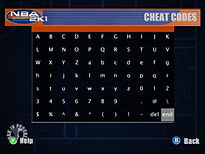
The virtual keyboard is basic and does not feature the distinctive design of the one eventually adopted. But at least it works!
A Sub-Menu for creating your dream avatar is missing. In final game, the second window of ‘PLAYER CREATE’ combines into a single screen the customization settings that are usually found on the page unavailable in the prototype. There’s no visual of the basketball player—although sometimes they appear but as small as an ant—that allows you to evaluate the changes made to the character during the creation process.

Regardless of the Street court chosen, the player will always play in the same standard indoor arena. However, it is worth noting the existence of unknown locations, such as Venice Beach! It might be necessary to force the build to load them in order to play there…
When selecting a team in Practice mode, the NBA team logo appears in two dimensions rather than three. However, in Exhibition mode, the crests are in 3D, even though some colors do not yet match the final version. The prototype uses the old Magic logo.
Long live pink

This NBA 2K1 beta does not provide the opportunity to play with the teams: 50s, 60s Legends – 70s East Legends – 70s West Legends – 80s East Legends – 80s West Legends.
The team statistics (‘OFFENSE’ / ‘DEFENSE’ / ‘OVERALL’) do not correspond to the strengths and weaknesses of the teams in the commercially released NBA 2K1. Could this information be coming from the first NBA 2K by Visual Concepts?
The loading screens aren’t animated, and appear confusingto be frozen without the spinning basketball.
A match starts immediately, without the usual introduction that includes an aerial then downward view of the court and the presentation of the players, one by one, by the commentator.
Rather than appearing periodically at the top left, the ‘Action Replay’ icon, which highlights a great play during a game, is located at the bottom left of the screen.
In Exhibition mode, the cursor targeting the ball carrier never indicates the player’s identity.
The box that regularly informs the player—for example, of recent mistakes or the current score—stands out for its basic appearance.
Carter’s model, wearing the Raptors’ number 15, replaces almost all NBA players in the prototype, regardless of the team selected (a Placeholder). When this quirk appears on screen, Carter sports a pink mask and green ‘mittens,’ highlighting the work still needed by the developers to replace these temporary textures with the players’ actual faces and hands. This bizarre peculiarity led me to nickname this build of NBA 2K1 (NBA 2K0.5) ‘The Mask Build’!
The Mask Build, okay, it’s pink…

Does this NBA 2K1 prototype already incorporate improvements in artificial intelligence, animations, and gameplay compared to NBA 2K? Who will be responsible for examining these aspects in more detail?
The peculiarities of the VMU and the remnants of an E3 build
This NBA 2K1 Dreamcast requires 198 blocks of free space on the memory card to save a game (tested from ‘Save’ in the ‘CUSTOMIZE’ Menu). The build automatically identifies the save file as ‘SEGANBKSET’. In the final version, it is called ‘VCSEGANBA2k1’ and is limited to 63 blocks of storage.
The prototype uses the older NBA 2K visual on the VMU screen and does not yet use the updated image of NBA 2K1. Of course, that is when the memory card actually displays anything…
A memory from the E3 version

The ‘E3 NETWORK SETUP’ window appears before loading the Main Menu if no VMU is detected or if the memory card contains a save file from the title that the prototype does not recognize. This is one of the screens dedicated to NBA 2K1’s Online mode, likely from an earlier build created specifically for the now-defunct California expo. By pressing the START button with the ‘Station Name’ option set to ‘NON-NETWORK’, the appropriate Menu will appear. This is the only way to access this remnant of Visual Concepts’ game demonstration at the Electronic Entertainment Expo 2000. Setting ‘Station Name’ to ‘NBA2k1 DC 1’ (this number increases up to 20), this NBA 2K0.5 prototype attempts to connect to the server but never goes past the ‘Connecting to Network’ message. This oddity repeats in the September 11, 2000 build discussed below.
Curiously, with a Visual Memory Unit connected to the Dreamcast and no game progress saved from another version of NBA 2K1, the ‘E3 NETWORK SETUP’ Menu no longer appears. Consequently, the ‘Network Play’ option in the Main Menu is no longer greyed out, as it was when no VMU was connected. From ‘Network Play’, the player can access the Sub-Menus ‘LOBBY SELECT’ and ‘E3 LOBBY’. There is no way to return to the previous menu once inside ‘E3 LOBBY’.
A bug or the beginning of a sequence to unlock development tools?
Cheat codes
NBA 2K1 for Dreamcast is nothing more than an extension of the title that launched Visual Concepts successful franchise. VC employees designed the second installment based on NBA 2K, just as NFL 2K1 relies on the architecture of NFL 2K. The July and September 2000 prototypes contain components from the first basketball game in the 2K franchise within their files, such as the NBA 2K introduction cinematic in SFD format (unused). Among the elements visible on-screen are, in particular, the cheat codes from NBA 2K, which had not yet been reworked or rewritten for the upcoming release of NBA 2K1. The builds’ executable lists them as follows; logically, the 1ST_READ of the final version does not include them (the cheats exclusive to these betas are shown in red):
The list of Cheats in the 1ST_READ

DEVDUDES (Superstars feature unlocked): Secret teams
BIGFOOT (Bigfoot ! No Bigfoot. (Sigh.)): Bigfoot mode
FATHEAD (Enabled giant heads ! Disabled giant heads): Giant head mode
COACHOUCH (Enabled ouchey coaches ! Disabled ouchey coaches): Coaches in “pain” mode
HIMOM (Hi Mom ! Love, Your Child): Hidden message
LITTLEGUY (Enabled micro players ! Disabled micro players): Mini player mode
DOUGHBOY (Enabled doughboys ! Disabled doughboys): Obese players
SQUISHY (Enabled squished players ! Disabled squished players): Flat players
BEACHBOYS (Enabled beachboys ball ! Disabled beachboys ball): Huge ball
MONSTER (Enabled monstrous players ! Disabled monstrous players): Giant players
HORSLEYROCKS (Horsley rocks ! Horsley fails to rock): Funny commentator voices
EXTRACAMERAS (Extra Cameras feature unlocked): ?????????
DEBUG (Debug feature unlocked): ?????????
The cheat ‘DEVDUDES’ unlocks the following teams, each with a name and a 3D emblem unique to the prototypes (on the left, the development version; on the right, the final version):
The July 26, 2000 prototype
Insomniacs1 (3D logo from the first game) = Sega Sports (3D logo from the second game)
Insomniacs2 (3D logo from Sega Sports) = SegaNet (3D logo from SegaNet)
Insomniacs3 (3D logo from SEGA) = MoCap (3D logo from Motion Capture)


The September 11, 2000 prototype
Insomniacs 1 (3D logo from the second game) = Sega Sport (3D logo from the second game)
Insomniacs 2 (3D logo from SEGA) = SegaNet (3D logo from SegaNet)
Insomniacs 3 (3D logo from SEGA) = MoCap (3D logo from Motion Capture)


What could the DEBUG and EXTRACAMERAS cheats correspond to? Nothing happens when they are activated!
Comparative screenshots
Analyzing intermediate builds of a sports simulation proves to be complex. Many factors must be taken into account. Ideally, this NBA 2K0.5 should be compared with the final versions of NBA 2K and NBA 2K1, which would make its examination even more challenging. It also requires a deep understanding of the game and its mechanics. Here are several photos illustrating the differences between this NBA 2K1 prototype and its final version—a picture is worth a thousand words (on the left, the beta; on the right, the final version):
The Trades sub-menu from the Customize Menu


The Main Menu

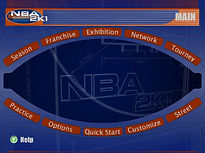
The virtual keyboard

The first window for creating the avatar


The Options Menu


The Menu for selecting a team in Practice mode


The Menu for selecting a team in Exhibition mode


The Presentation sub-menu in the Options Menu


The Team sub-menu in the Customize Menu


The User sub-menu of Records in Customize

The Menu for playing Online


The Street mode court selection Menu


The Loadings Screens


The second window for avatar creation


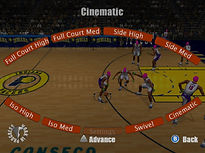
The camera selection from the Pause Menu

The Practice mode court


The human player assignment Menu


The Customize Menu


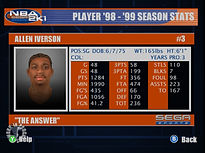
The player cards


The Menu to delete save files and view their sizes


In summary, this Dreamcast prototype combines elements from NBA 2K and NBA 2K1. This blend gives rise to a unique version of Visual Concepts’ game, affectionately nicknamed NBA 2K0.5!
.jpg)
You can download this build of NBA 2K1 Dreamcast below
The Jason Voorhees Build: The September 11, 2000 Prototype
The Jason Voorhees Build dates from September 11, 2000, at 16:23:23—about two months after The Mask Build and only 40 days before the final version. Many aspects already mentioned in the previous prototype are repeated here without being fixed. The developers worked hard between September 11 and 21—the date of another NBA 2K1 beta listed on the Hidden Palace site, with no known special features—to refine and polish the game. A dedicated chapter is warranted for this NBA 2K1 prototype, highlighting some of its features that make it unique.
NBA 2K1 Dreamcast Prototype Trailer (The Jason Voorhees Build)
The Franchise mode is finally available! Nothing really matches, to put it mildly, to the final Dreamcast version we know. Here are a few examples in photos:
The Franchise Mode Home Menu


The Management Playbook sub-menu in Franchise


The prototype manages to ‘connect’ to the Internet from the ‘E3 NETWORK SETUP’ Menu (described earlier). However, it is impossible to navigate the ‘E3 LOBBY Challenge An Opponent’ Sub-Menu.
Unfinished jersey, Legends teams (Real rendering)

Unfinished character, Insomniacs (Real rendering)

Street mode reveals yet another unknown court, Laguna Beach (Mosswood is written at the bottom center of the screen in the photo). Unfortunately, by default, the prototype loads a different arena instead of the intended streetball courts.
The Replay function in the Pause Menu does not work fully (only in Exhibition and Quickstart modes). It immediately freezes the game and does not allow interaction with the camera to view the recorded play. Yet, two months earlier, it had worked perfectly!
The virtual keyboard behaves strangely. The keys aren’t visible, but you can still select and input the letters.
The build fixes the pink and green character texture anomaly observed in the July 2000 version. It introduces the Legends teams, composed of virtual athletes with unfinished graphics. The rendering of the members of the Insomniac 1, 2, and 3 teams is problematic. The Flycast and DeMul emulators each display their own graphical treatment to these quirks, which are also visually different to the version running real Dreamcast hardware. This bewildering originality leads me to nickname this version of NBA 2K1 (NBA 2K0.75) The Jason Voorhees Build!
This build experiences numerous crashes, particularly when trying to activate certain options or open Menus, especially in Franchise mode.
The Jason Voorhees Build, or how to experience a horror show in a sports game!
.jpg)
You can download this build of NBA 2K1 Dreamcast below
Other prototypes of the NBA 2K Dreamcast series games
These Dreamcast prototypes are almost identical to the final version. Since they show only marginal differences, they are available for direct download. No in-depth research has been conducted on them.
.jpg)
.jpg)

Unable to dump the disc at the moment
%20Bis.jpg)
.jpg)
This article is dedicated to the betas of the NBA 2K series games. It serves as a supplement to the article focused on the work of Visual Concepts, covering the making-of of their iconic titles, with exclusive testimonies that put them into perspective, as well as the Dreamcast prototypes of: Floigan Bros.: Episode 1 - NFL 2K1 - NCAA College Football 2K2 - NBA 2K - NBA 2K1 - NBA 2K2 - Fantasy Prototype (Proof of Concept) - NHL 2K - NHL 2K2 - World Series Baseball 2K2 - Over The Top Soccer (Unreleased) - ToeJam & Earl III Mission to Earth (Unreleased) - Ooga Booga. Discover the entire preservation project dedicated to this talented SEGA-affiliated studio on following page: [The Rise of Visual Concepts in the SEGA Era: Prototypes and Behind the Scenes of the Making of Their Dreamcast Classics]
I would like to thank, for their availability and kindness, all the people closely or indirectly involved with the NBA 2K Dreamcast series, Visual Concepts, or SEGA with whom I have spoken. Their memories provide us with deeper insights into this talented development studio, its various games, and the NBA 2K franchise!
Special thanks to:
-
Hicks or proofreading and correcting the French text
-
Tome Waterhouse for the English translation of the article
-
Megavolt85 and LemonHaze (from Team Wulinshu) for their investigations into the NBA 2K1 prototype analyzed in detail on this page
Really special prototypes (big differences, early Builds, weird ones, etc.): Guilty Gear X (DC) - Dead or Alive 2 (DC) - Samba De Amigo (DC) - Virtual-On Oratorio Tangram (DC) - Spirit of Speed 1937 (DC) - Re-Volt (DC) - Phantasy Star Online (DC) - San Francisco Rush 2049 (DC) - Evil Twin: Cyprien's Chronicles (DC) - Toy Racer (DC) - Space Channel 5 (DC) - Sega Smash Pack Vol.1 (DC) - Red Dog (DC) - Propeller Arena (DC) - Half-Life (DC) - Jet Set Radio (DC) - Daytona USA 2001 (DC) - Floigan Bros. Episode 1 (DC) - NBA 2K1 (DC) - NFL 2K1 (DC) - NHL 2K (DC) - World Serie Baseball 2K2 (DC)
More than 300 prototypes have been digitized. You will find them available for free download in the section: [Dreamcast prototypes (and more) available for download]
